When the weather starts warming up, most of us notice it the same way—we crack open a window, spend a little more time outside, and eventually reach for the thermostat. After sitting mostly idle through the colder months, your air conditioner suddenly has a big job ahead of it. And like any hardworking machine, it performs better when it gets a little attention before the busy season begins.
Too often, homeowners wait until the first scorching afternoon to discover their AC isn’t cooling properly. Maybe the airflow feels weak, the system makes an odd noise, or worse, it refuses to turn on altogether. Those situations are frustrating, but they’re also surprisingly common.
A little preventive maintenance can make a noticeable difference. It doesn’t have to be complicated or time-consuming. In fact, many maintenance tasks are simple enough to become part of your yearly spring routine, while a professional inspection helps catch the issues you can’t easily see.
Why Spring Is the Best Time to Prepare Your AC
Spring offers the perfect window for maintenance because temperatures are still comfortable, and HVAC companies typically have more scheduling flexibility than they do during peak summer months.
Waiting until the middle of July isn’t ideal. By then, technicians are often handling emergency breakdowns, and appointment availability can become limited. Getting ahead of the rush means your system is ready before it has to work its hardest.
More importantly, maintenance performed in spring helps ensure your equipment operates efficiently from day one instead of struggling through weeks of unnecessary wear.
Start With a spring ac maintenance checklist
Having a simple spring ac maintenance checklist keeps important tasks from being overlooked. It doesn’t need to be overly detailed, but covering the basics each year creates good habits that pay off over time.
Your checklist might include:
- Replace or inspect the air filter.
- Clear debris around the outdoor condenser.
- Check visible refrigerant lines for damaged insulation.
- Inspect supply and return vents throughout the home.
- Test the thermostat.
- Listen for unusual sounds during startup.
- Schedule a professional HVAC inspection.
These small tasks don’t take long, yet they help identify potential concerns before they become expensive repairs.
Don’t Underestimate the Air Filter
If there’s one maintenance task nearly every homeowner can handle, it’s replacing the air filter.
A dirty filter restricts airflow, forcing the blower motor to work harder than necessary. Reduced airflow can also affect cooling performance and even contribute to frozen evaporator coils under certain conditions.
Filter replacement schedules vary depending on household conditions. Homes with pets, allergies, or frequent HVAC use often benefit from changing filters every one to three months.
It’s a surprisingly inexpensive habit with benefits that extend well beyond cleaner air.
Give the Outdoor Unit Some Breathing Room
During fall and winter, leaves, branches, weeds, and dirt naturally collect around outdoor condenser units.
Your AC relies on unrestricted airflow to release heat outside. When vegetation crowds the unit or debris blocks the fins, efficiency begins to suffer.
Walk around the condenser and clear away anything within a couple of feet. Trim shrubs if they’ve grown too close, remove leaves, and gently rinse dirt from the exterior using a garden hose.
Avoid using high-pressure washers, though. Condenser fins bend easily, and damaged fins reduce airflow instead of improving it.
Professional air conditioner maintenance Goes Beyond DIY
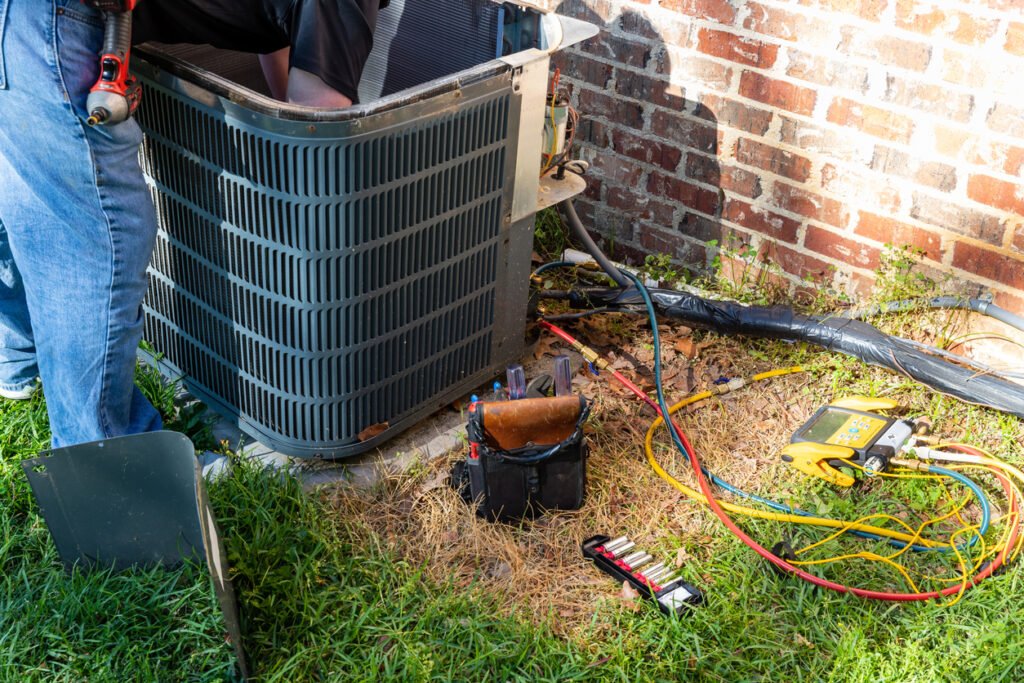
Homeowners can certainly handle routine cleaning and filter replacement, but professional air conditioner maintenance includes inspections that require specialized tools and experience.
Technicians typically inspect electrical connections, measure refrigerant pressure, clean evaporator and condenser coils, verify airflow, test safety controls, lubricate moving components where applicable, and confirm the system operates within manufacturer specifications.
Many hidden problems don’t produce obvious symptoms right away. A weakening capacitor, loose electrical terminal, or minor refrigerant issue might still allow the system to function—at least for now.
Finding those problems early is exactly what preventive maintenance is designed to accomplish.
Check Your Thermostat Before Summer Arrives
Sometimes homeowners assume their AC isn’t cooling properly when the real issue is an outdated or improperly programmed thermostat.
Test the thermostat before temperatures climb too high.
Set it several degrees below room temperature and verify that the system starts normally. If you have a programmable or smart thermostat, review the schedule to ensure it matches your family’s routine.
Even small programming adjustments can improve comfort while reducing unnecessary energy consumption.
Pay Attention to Strange Sounds and Smells
Your air conditioner doesn’t have to stop working completely before it signals that something needs attention.
Grinding noises, buzzing, rattling, frequent cycling, or unusual odors should never be ignored.
These warning signs often indicate loose components, electrical concerns, worn bearings, or airflow restrictions. While the system may continue operating temporarily, delaying repairs can allow minor problems to become much more expensive.
Trust your instincts. If something seems different than it did last year, it’s worth having it inspected.
Efficiency Matters More Than Ever
Energy costs continue rising in many areas, making HVAC efficiency increasingly important for homeowners.
Even a moderately dirty system consumes more electricity than a clean, properly adjusted one. Over an entire summer, that extra energy usage adds up.
Routine maintenance helps restore airflow, improve heat transfer, and reduce unnecessary strain on compressors and blower motors.
The result isn’t necessarily dramatic overnight savings, but rather consistent performance that keeps monthly utility bills more manageable over time.
Preparing for the cooling season Means Fewer Surprises
Every homeowner hopes their air conditioner simply works when it’s needed most.
Preparing for the cooling season isn’t about guaranteeing perfection—no mechanical system can promise that—but it significantly improves reliability.
Preventive inspections reduce the likelihood of unexpected breakdowns, improve overall comfort, and help extend equipment lifespan. They also provide confidence that your home will stay comfortable during those long stretches of summer heat when your AC rarely gets a chance to rest.
That’s a reassuring feeling, especially when outdoor temperatures climb into triple digits.
A Little Preparation Goes a Long Way
Air conditioners are easy to forget because they spend much of the year quietly waiting for warmer weather. Yet once summer arrives, they quickly become one of the hardest-working systems in any home.
Taking a little time each spring to inspect, clean, and professionally service your equipment is one of the smartest investments you can make in home comfort. It helps improve efficiency, lowers the risk of inconvenient breakdowns, and often extends the life of your HVAC system.
The best part is that none of it requires dramatic effort. A clean filter, a clear outdoor unit, a properly functioning thermostat, and an annual professional inspection create a solid foundation for reliable performance.
When the hottest day of summer finally arrives, you’ll be glad you prepared long before you actually needed the cool air.