There’s something easy to take for granted about water. You turn on the tap, fill a glass, rinse some vegetables, and get on with your day. But water can carry more than we realize. Depending on where it comes from and how it travels to your home, it may contain sediment, chlorine, minerals, metals, microorganisms, or other unwanted substances.
That doesn’t automatically mean your water is unsafe. It simply means that knowing what’s actually in it can help you make smarter decisions.
Good water filtration isn’t about buying the biggest or most expensive system on the market. It’s about matching treatment to the quality of your water, your household’s needs, and the things you want to improve. Sometimes, a simple filter under the kitchen sink is enough. In other homes, a more comprehensive approach makes much more sense.
Start by Understanding Your Water
Before choosing any filtration equipment, find out what you’re dealing with.
Municipal water and private well water can have very different characteristics. City water is generally treated before it reaches your property, but treatment doesn’t necessarily remove every substance people may want to reduce. Chlorine, for example, is commonly used as a disinfectant and can affect taste and smell.
Well water has its own set of challenges. It may contain iron, manganese, sediment, sulfur compounds, hardness minerals, or naturally occurring contaminants. And unlike public water supplies, private wells aren’t routinely monitored by a municipal water provider.
A water test can reveal a lot.
Instead of guessing based on cloudy water, stains around fixtures, or an unpleasant smell, testing gives you actual information. It helps identify whether the issue is hardness, sediment, dissolved metals, microbial contamination, or something else entirely.
That matters because different contaminants require different treatment methods.
Why One Filter Doesn’t Solve Every Problem
It’s tempting to think of a water filter as one universal solution. In reality, filtration is more like choosing the right tool for a particular job.
Sediment filters can capture particles such as sand, dirt, and rust. Activated carbon is widely used to improve taste and reduce chlorine and certain organic compounds. Other technologies are designed for specific concerns, including iron, hardness, bacteria, or certain dissolved contaminants.
Reverse osmosis, for instance, uses a semipermeable membrane to reduce a broad range of dissolved substances. It can be particularly useful for drinking and cooking water, although it also produces wastewater and requires appropriate maintenance.
The key is not to throw every available technology at the problem. That can add unnecessary cost and complexity.
Instead, think in terms of what your household actually needs.
When Whole-Home Filtration Makes Sense
If the concern extends beyond drinking water, treating only one tap may not be enough.
A whole house water filtration system treats water as it enters the home, helping provide filtered water throughout the plumbing network. That means the water used for showers, baths, laundry, cooking, and cleaning can all receive treatment, depending on the system and its capabilities.
For some households, that convenience is the biggest advantage.
Imagine not having to think about which faucet has filtered water. You shower, wash your hands, fill a pet’s bowl, or run the washing machine without having to remember a separate treatment point.
Whole-home systems can also make sense when water has noticeable sediment, odor, or other characteristics that affect several fixtures rather than just the kitchen faucet.
Still, the system should be selected according to test results. A whole-house carbon filter may be useful for chlorine and taste concerns, while a household dealing with hardness may need a water softener in addition to filtration. These are different jobs, and treating them as interchangeable can lead to disappointing results.
Don’t Confuse Filtration With Water Softening
This is one of the most common points of confusion.
Hard water contains minerals, primarily calcium and magnesium. It isn’t necessarily dangerous to drink, but it can be frustrating around the house. You might notice white scale on faucets, cloudy shower doors, stiff laundry, or reduced efficiency in water heaters and appliances.
A traditional water softener addresses hardness by exchanging calcium and magnesium ions for sodium or potassium ions. A filter, on the other hand, is generally intended to remove or reduce specific particles, chemicals, or other contaminants.
So if your main complaint is scale buildup, installing a basic carbon filter may not solve the underlying issue.
Likewise, a softener isn’t designed to handle every contaminant found in water.
Sometimes a home needs both technologies. That’s perfectly normal.
Choosing Between Different Water Filter Systems
There are countless water filter systems available, from simple faucet attachments to sophisticated whole-property treatment setups. The right choice depends on several practical factors.
Consider:
- The source of your water
- Results from a recent water test
- The contaminants or minerals you want to reduce
- How much water your household uses
- Available installation space
- Ongoing maintenance requirements
- Replacement filter costs
- Your budget
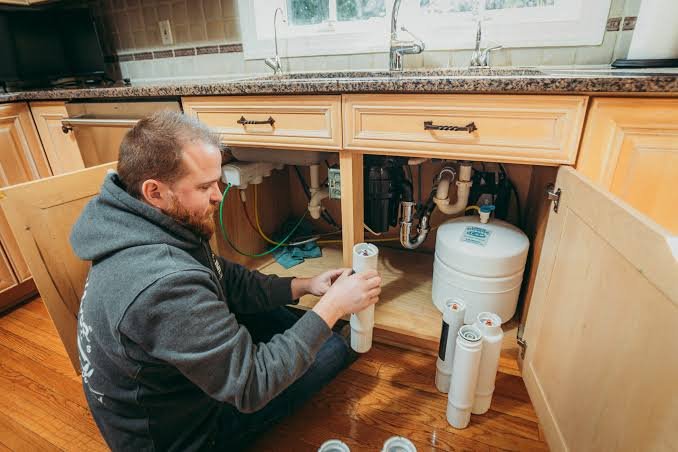
Point-of-use filters are often convenient for people who mainly want better drinking and cooking water. Under-sink systems are less visible and can provide a dedicated source for the kitchen.
Whole-home systems are more comprehensive, but they require proper sizing. A system that’s too small may struggle to keep up with household demand, while an oversized setup can mean spending more money than necessary.
And don’t forget maintenance. Every filtration system has a useful operating life, but filters eventually become saturated or clogged. Ignoring replacements can reduce performance and, in some cases, create additional problems.
Look Beyond the Initial Price
The cheapest system isn’t always the most affordable option over time.
A low-priced filter may seem attractive until replacement cartridges, professional servicing, special components, and installation costs are added. On the flip side, the most expensive equipment isn’t automatically the best choice either.
Think about total ownership costs.
How often does the filter need changing? Are replacement cartridges readily available? Does the system require electricity? Will it need professional servicing? Is there a warranty? What happens if a component fails?
These questions aren’t particularly glamorous, but they can save you plenty of frustration later.
A reliable system that quietly does its job for years is usually more valuable than one loaded with features you don’t actually need.
Installation Matters More Than People Think
Even a well-designed filtration system can perform poorly if it’s installed incorrectly.
Water flow, pressure, pipe sizing, drainage, bypass arrangements, and available space all matter. Some systems also require specific plumbing connections or electrical components.
Professional installation can help ensure the equipment is sized and configured correctly. It also provides an opportunity to inspect existing plumbing for problems that could affect performance.
If you’re installing a complex system, cutting corners at this stage can turn into an expensive lesson.
Make Water Quality a Long-Term Habit
Better water quality isn’t a one-time purchase. It’s an ongoing process.
Test your water periodically, pay attention to changes in taste or odor, replace filters when recommended, and keep an eye on household fixtures. If something suddenly changes, don’t simply assume the filter needs replacing. There could be a problem with the water source or plumbing itself.
Most importantly, don’t buy treatment equipment based solely on advertising claims.
Start with the water. Understand the problem. Then choose the technology that actually addresses it.
Clean, pleasant water should feel ordinary. That’s the whole point. Once the right filtration approach is in place and properly maintained, you shouldn’t have to think about it every time you reach for the tap — and honestly, that’s a pretty good sign that you got it right.