For a long time, education in India followed a familiar pattern. Students sat in classrooms for hours, copied notes from blackboards, memorized chapters before exams, and repeated the cycle year after year. Marks mattered. Discipline mattered. Finishing the syllabus mattered even more.
But somewhere along the way, many parents started asking a difficult question: is memorization alone really preparing children for the future?
That question is quietly reshaping the education landscape across India.
Experiential learning schools — institutions focusing on hands-on activities, problem-solving, projects, collaboration, creativity, and real-world application — are attracting growing attention from modern parents. And honestly, the shift feels less like a passing trend and more like a reflection of changing expectations around childhood itself.
Parents Are Becoming More Conscious About Emotional Development
Earlier generations often viewed education mainly as a pathway toward stable careers. Academic scores dominated conversations at home. But today, many parents think more broadly about development.
They worry about confidence, communication skills, creativity, emotional intelligence, curiosity, and adaptability — qualities traditional classroom structures sometimes struggle to nurture consistently.
Experiential learning models appeal because they make children participate actively instead of absorbing information passively.
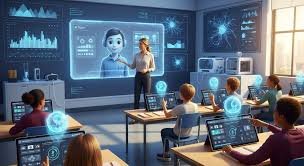
Students may learn science through experiments, environmental studies through gardening, mathematics through practical problem-solving, or teamwork through collaborative projects. The classroom starts feeling more dynamic and less mechanical.
And honestly, many parents notice the emotional difference immediately. Children often appear more engaged, expressive, and less fearful of asking questions.
The Pandemic Changed Educational Thinking
COVID-19 played a surprisingly important role in accelerating this shift.
When schools moved online, parents suddenly observed their children’s learning experiences directly for the first time in years. Many realized how disconnected or passive traditional learning sometimes felt. Endless screen-based lectures exposed weaknesses in rote-focused education systems very clearly.
At the same time, homeschooling discussions, activity-based learning, and alternative education approaches gained visibility online.
Parents began exploring schools emphasizing creativity, critical thinking, and practical exposure because the world itself was changing rapidly. Future careers now demand adaptability far beyond textbook memorization alone.
This is partly why conversations around India me experiential learning schools parents ko itne attract kyun kar rahe hain? are becoming increasingly common among urban families and educators alike.
Children Learn Differently Than Earlier Generations
Modern children grow up in completely different environments compared to previous generations.
They interact with technology constantly, consume visual information rapidly, and access endless content online. Traditional lecture-heavy systems sometimes struggle to hold their attention effectively because the learning style feels disconnected from how they naturally engage with the world.
Experiential learning responds to this reality by making education interactive.
Instead of simply reading about concepts, students explore, discuss, build, test, present, and reflect. This active participation often improves understanding because learning becomes connected to experience rather than pure memorization.
And honestly, children usually remember things better when they personally experience them.
Anyone who has watched a child explain a science experiment excitedly after school understands this immediately.
Parents Want Less Fear-Based Education
One emotional factor driving experiential learning popularity is the desire to reduce academic pressure.
Many Indian parents themselves grew up in highly competitive education environments filled with exam anxiety, strict discipline, comparison culture, and fear of failure. Some succeeded academically but still remember the emotional stress attached to schooling.
Naturally, they want something healthier for their children.
Experiential schools often promote collaborative learning, exploration, and curiosity rather than constant ranking systems. While academic performance still matters, the environment generally feels less rigid and fear-driven.
That softer approach appeals strongly to parents concerned about mental health, burnout, and confidence issues among children.
Especially after rising awareness around student stress and emotional wellbeing, educational philosophies emphasizing balance gained momentum rapidly.
Real-World Skills Matter More Now
The modern workforce changed dramatically over the last decade.
Employers increasingly value communication, leadership, adaptability, creativity, and problem-solving alongside technical knowledge. Parents notice this shift clearly. Scoring well in exams alone no longer guarantees career success automatically.
Experiential learning models often integrate presentations, teamwork, independent thinking, and practical projects much earlier into education.
Students learn how to speak confidently, manage responsibilities, ask questions, collaborate with peers, and apply concepts outside textbooks. Those experiences gradually build real-world confidence.
And honestly, many parents today care less about children memorizing facts perfectly and more about whether they can think independently.
That mindset shift explains why people increasingly ask, India me experiential learning schools parents ko itne attract kyun kar rahe hain? because the demand reflects changing definitions of success itself.
Of Course, Challenges Still Exist
Despite the enthusiasm, experiential learning schools are not perfect solutions for everything.
Some institutions market themselves aggressively as “innovative” without delivering meaningful educational depth. Others become so focused on activities that academic structure weakens unintentionally.
Affordability is another major issue.
Many experiential schools charge high fees, making them inaccessible for large sections of Indian families. This creates concern that alternative learning opportunities may become limited primarily to wealthier urban households.
There’s also the reality that traditional board exams and competitive entrance systems still exist. Parents sometimes worry whether highly flexible learning models prepare students adequately for rigid academic evaluation structures later.
So the transition remains complicated rather than straightforward.
Indian Education Is Slowly Becoming More Diverse
Perhaps the most interesting part is that education itself is becoming less uniform.
Earlier, most schools followed nearly identical teaching methods regardless of student personality differences. Today, parents actively compare philosophies, learning environments, teaching approaches, and emotional culture before choosing schools.
That diversity reflects growing awareness.
Some families still prefer structured academic rigor. Others prioritize creativity and emotional development more heavily. Many seek balanced approaches combining both worlds.
And honestly, there probably isn’t one perfect model for every child anyway.
The Future of Learning May Feel More Human
At its core, experiential learning succeeds because it reconnects education with curiosity.
Children naturally explore, question, experiment, and imagine. Schools embracing experiential methods try to preserve that instinct rather than suppress it entirely through repetitive memorization alone.
That doesn’t mean textbooks disappear or discipline becomes irrelevant. Structure still matters deeply. But the relationship between students and learning starts feeling more alive somehow.
And perhaps that’s what parents are truly responding to.
Not just modern classrooms or creative activities, but the possibility that education can prepare children for life without making them lose their excitement for learning along the way.