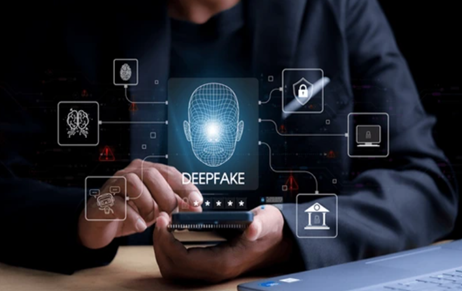
A few years ago, most people saw deepfake technology as a strange internet novelty. Videos of celebrities singing random songs or movie characters appearing in funny edits circulated online mostly for entertainment. It felt experimental, almost harmless.
But the technology evolved extremely fast.
Now deepfakes can imitate faces, voices, expressions, speech patterns, and even emotional tone with disturbing accuracy. Sometimes the fabricated content looks convincing enough that ordinary viewers struggle to tell what’s real anymore.
That shift changed everything.
Because once manipulated content becomes believable at scale, the consequences move far beyond internet jokes. Careers, reputations, elections, relationships, businesses, and public trust itself suddenly become vulnerable in ways society wasn’t fully prepared for.
That’s exactly why people are increasingly asking: Deepfake content ke against legal protection kitni important ho gayi hai?
Honestly, it may become one of the defining legal and ethical challenges of the digital era.
Deepfake Technology Is No Longer Difficult to Access
One reason this issue escalated so quickly is accessibility.
Earlier, creating realistic manipulated videos required advanced technical expertise and expensive editing capabilities. Today, AI tools dramatically reduced those barriers. Many applications can generate convincing synthetic content using relatively simple inputs.
That democratization created both creativity and chaos simultaneously.
Filmmakers, content creators, educators, and marketers may use synthetic media positively. But malicious actors can misuse the same technology for harassment, fraud, misinformation, impersonation, or emotional manipulation.
And unfortunately, harmful uses often spread faster online than responsible ones.
Reputation Damage Happens Instantly Online
The internet moves emotionally, not carefully.
Once fake content goes viral, public reactions often happen before verification even begins. A manipulated clip shared online can damage someone’s reputation within hours, regardless of whether the content eventually gets proven false later.
That’s especially dangerous because human psychology naturally reacts strongly to visual evidence.
People tend to believe what they see.
Even when deepfake content gets exposed eventually, the emotional impact may already remain. Public doubt lingers. Trust weakens. Careers suffer. Personal relationships get affected.
The damage often spreads much faster than corrections do.
Women Are Particularly Vulnerable
One deeply troubling reality is that deepfake abuse disproportionately targets women.
Non-consensual manipulated content involving women has become a major online harassment issue globally. Faces get inserted into explicit videos or fabricated material without permission, creating emotional trauma and severe privacy violations.
For victims, the experience can feel devastating because the internet rarely forgets quickly.
This is one reason Deepfake content ke against legal protection kitni important ho gayi hai? is no longer only a technology discussion. It’s increasingly a question about dignity, consent, and personal safety in digital spaces.
And honestly, existing laws in many countries still struggle to respond fast enough.
Political Misinformation Is Becoming More Dangerous
Deepfake risks extend beyond individuals too.
As elections and political conversations increasingly happen online, manipulated audio or video clips could influence public opinion very quickly. Imagine fake speeches, fabricated interviews, or misleading crisis footage spreading during emotionally charged political moments.
Even short-term confusion can create serious consequences.
The frightening part is that deepfakes don’t always need to fool everyone completely. They only need to create uncertainty.
Once people begin doubting all digital evidence generally, trust in genuine information weakens too.
That broader erosion of trust may become one of the biggest long-term societal risks.
Existing Laws Often Feel Incomplete
Many legal systems worldwide were not designed for AI-generated manipulation at this scale.
Traditional laws may cover:
- Defamation
- Identity theft
- Harassment
- Privacy violations
- Fraud
…but deepfakes combine multiple issues simultaneously in complicated ways.
Questions become messy:
- Who created the content?
- Which platform hosted it?
- How quickly should removal happen?
- What counts as malicious intent?
- How do you prove harm?
- What about parody or satire?
Legal systems now face pressure to define clearer frameworks specifically addressing synthetic media misuse.
Technology Companies Also Carry Responsibility
Governments alone probably cannot solve this issue fully.
Social media platforms, AI companies, and digital content services increasingly face expectations around:
- Detection systems
- Watermarking technology
- Rapid reporting tools
- Verification mechanisms
- Content moderation
Some companies are already experimenting with AI tools capable of identifying manipulated media automatically. But detection technology constantly races against generation technology.
And honestly, that battle may never completely end because both systems improve continuously.
Public Awareness Matters Too
One interesting shift happening recently is increased public skepticism toward digital content generally.
People now pause before trusting shocking videos immediately. That caution may actually become an essential survival skill in future internet culture.
Media literacy is becoming incredibly important.
Schools, universities, and public institutions may eventually need to teach people how synthetic media works — not only technically, but psychologically too.
Because the biggest danger often isn’t the technology itself. It’s how emotionally reactive humans become when confronted with believable misinformation.
Creative Industries Face Complicated Questions
Deepfake technology also creates uncomfortable questions for entertainment industries.
AI-generated voices, digital actors, resurrected performances, synthetic influencers — all these possibilities blur boundaries between creativity and exploitation.
Who owns a person’s face digitally?
Can voices be replicated commercially?
Should deceased public figures be recreated through AI?
These debates are only beginning.
And the legal answers will likely shape future media industries significantly.
The Balance Between Innovation and Protection Is Tricky
One challenge with regulating deepfakes is avoiding overly broad restrictions that accidentally limit legitimate creative or educational uses.
Synthetic media itself isn’t automatically harmful.
Movies, gaming, dubbing, accessibility tools, satire, language translation, and visual effects industries may all benefit positively from AI-generated media technologies.
The real issue is malicious misuse without consent or transparency.
So legal systems must balance innovation with accountability carefully — which is easier said than done.
Final Thoughts
Legal protection against deepfake content is becoming essential because digital trust itself is increasingly fragile. When manipulated videos, audio, and images become indistinguishable from reality, reputations, privacy, political stability, and public confidence all become vulnerable.
This issue is no longer theoretical anymore. It’s already affecting real people emotionally, financially, and socially across the world.
The challenge now is creating systems that protect individuals without stopping technological progress entirely. That balance will likely define much of the next decade of internet regulation.
And honestly, as AI-generated media becomes even more realistic, society may eventually value one thing more than ever before: proof that something is genuinely real.