Water is one of those things we rarely question when it comes out of the tap. Turn the handle, fill a glass, and get on with your day. Simple.
But water quality can vary quite a bit depending on where you live, the source of your water, the condition of local pipes, and what’s naturally present in the supply. Sometimes the signs are obvious—a strange taste, an unpleasant smell, cloudy water, or mineral stains around your fixtures. Other times, you may notice nothing at all.
That’s why understanding water filtration is useful. It isn’t about assuming your tap water is bad. It’s about knowing what’s actually in your water and deciding whether additional treatment would make sense for your household.
Why Water Quality Deserves a Closer Look
Municipal water supplies and private wells can have very different characteristics. Even within the same region, households may experience differences because of plumbing materials, groundwater conditions, or the age of the local infrastructure.
Hard water, for example, can leave chalky deposits on faucets and showerheads. Sediment can affect appearance and taste. Certain households may also have specific concerns based on their water source.
Professional water filtration services can help homeowners understand these issues and identify an appropriate filtration approach instead of simply buying the first system they see advertised.
The important word here is “appropriate.” More filtration isn’t automatically better. The goal is to address an actual water-quality concern without spending money on equipment you don’t need.
Start With Testing, Not Guesswork
It’s tempting to purchase a filter after noticing an unpleasant taste or seeing white residue around a faucet. But those symptoms don’t always tell the whole story.
Water testing provides a clearer starting point. Depending on the source and the concerns involved, testing may look at characteristics such as hardness, sediment, pH, or other substances.
Once you understand what’s present, choosing a treatment system becomes much easier.
For example, a household dealing mainly with sediment may need a different solution from one struggling with hard water. Someone concerned about drinking-water taste may have different priorities from a homeowner looking for whole-house treatment.
It’s a little like taking your car to a mechanic. You wouldn’t replace every part just because the engine made a funny noise. You’d find out what’s actually wrong first.
What Filtration Can Do for Everyday Water
The purpose of a filtration system depends on its design.
Some filters are intended to reduce sediment or particles. Others can address specific contaminants or improve taste and odor. Water softeners are designed primarily to reduce hardness rather than perform the same function as a drinking-water filter.
For many households, the biggest benefit is simply having confidence in their water. Knowing that a properly selected and maintained system is addressing a specific concern can make everyday tasks feel a little easier.
Of course, filtration isn’t a substitute for safe water infrastructure or proper sanitation. If there is a serious water-quality problem, identifying the source and addressing it properly is essential.
Clean Water Is About More Than What You Can See
One common misconception is that clear water must be perfectly clean.
Unfortunately, appearance doesn’t tell you everything. Water can look completely normal while still containing substances you may want to reduce through treatment.
That’s why clean and safe water should be approached through testing, appropriate treatment, and regular maintenance rather than appearance alone.
If your home uses well water, periodic testing can be particularly important because private wells aren’t managed in exactly the same way as municipal water supplies. Changes in taste, odor, color, or nearby environmental conditions are good reasons to investigate.
And if you’re unsure about the quality of your drinking water, don’t rely on internet guesses. Get it tested.
Choosing the Right Type of Filter
There are plenty of filtration products on the market, and the variety can be confusing.
Point-of-use filters treat water at a specific faucet or drinking-water outlet. Whole-house systems treat water as it enters the property, which may be useful when the concern affects multiple fixtures.
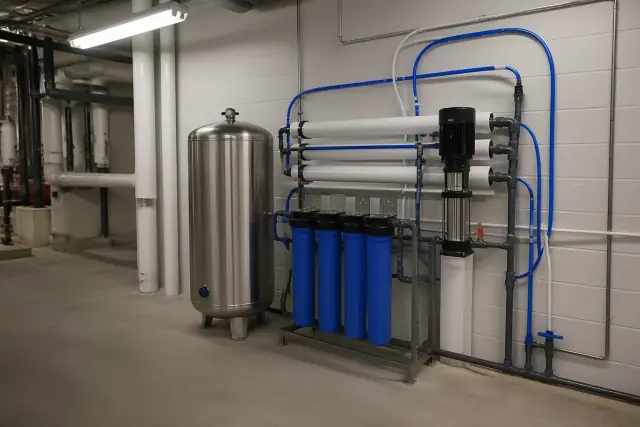
There are also systems designed for specific purposes, including sediment filtration, carbon filtration, water softening, and membrane-based treatment.
The best choice depends on your water filtration needs, water source, household size, existing plumbing, and the particular issue you’re trying to solve.
This is where professional advice can be useful. A qualified water-treatment specialist can help match the system to your actual situation instead of selling you a one-size-fits-all package.
Maintenance Is Part of the Deal
Buying a filtration system is only the beginning.
Filters need to be changed according to the manufacturer’s recommendations. Some systems require periodic cleaning, inspections, or replacement of specific components. Ignoring maintenance can reduce performance and, depending on the system, create other problems.
Keep track of filter replacement dates. If your water suddenly tastes different or flow becomes noticeably slower, don’t automatically assume the entire system has failed. The filter may simply be overdue for replacement.
It’s an unglamorous task, admittedly, but it matters.
Don’t Forget the Rest of Your Plumbing
Water quality and plumbing health are closely connected.
Hard water can contribute to scale buildup in pipes, fixtures, and appliances. Sediment can affect certain components. Older plumbing materials can also influence the quality of water reaching your taps.
This means filtration should be considered as part of the bigger picture rather than a magic box that solves every plumbing issue.
If you’re installing a new system, consider having the plumbing inspected as well, especially if the property is older or you’ve already noticed low pressure, leaks, or discoloration.
A Better Approach to Water Treatment
Good water treatment isn’t about buying the most expensive system or installing the biggest filter available.
It starts with a simple question: what does your water actually need?
Test the water. Understand the results. Choose a treatment method designed for the specific concern. Then maintain the system properly.
That approach is more practical, more economical, and usually much less stressful than chasing every water-treatment claim you see online.
At the end of the day, water should be something you can use without constantly wondering about it. With the right information and a sensible filtration setup, you can protect your household, care for your plumbing, and enjoy better-tasting water with a little more peace of mind.
Sometimes the smartest home improvement isn’t the flashiest one. It’s the one that quietly makes everyday life better.