Water is easy to take for granted when everything is working properly. In a commercial building, manufacturing plant, hotel, or food-processing facility, it flows through the day without much attention. But when water quality starts causing problems, the effects can spread quickly. Equipment develops scale, production processes become less consistent, maintenance costs rise, and businesses may find themselves dealing with interruptions they could have avoided.
Every facility has different water requirements. A restaurant may need reliable water for food preparation and cleaning, while a manufacturing plant might depend on carefully controlled water chemistry for its production process. Hotels, hospitals, laundries, and office buildings have their own priorities, too.
The challenge isn’t simply to install a filter and hope for the best. It’s to understand how water is used throughout the facility, identify the issues that matter most, and build a treatment plan around those needs. With the right approach, water management can support equipment reliability, operational efficiency, and more predictable long-term costs.
Why Water Quality Matters in Commercial Operations
Water quality influences far more than drinking water. It can affect boilers, cooling towers, heat exchangers, washing equipment, plumbing fixtures, and manufacturing processes. Even a relatively small amount of scale or sediment can become a recurring problem when equipment operates for long hours every day.
Hard water is a common example. Calcium and magnesium can accumulate on heated surfaces, reducing heat-transfer efficiency and increasing cleaning requirements. In some systems, scale buildup may contribute to overheating, restricted flow, and premature equipment wear.
Other issues may be less visible. Suspended solids can clog filters, certain dissolved minerals can cause staining, and inappropriate water chemistry can contribute to corrosion. Depending on the facility, microbial control may also be essential for safe operation and compliance with applicable standards.
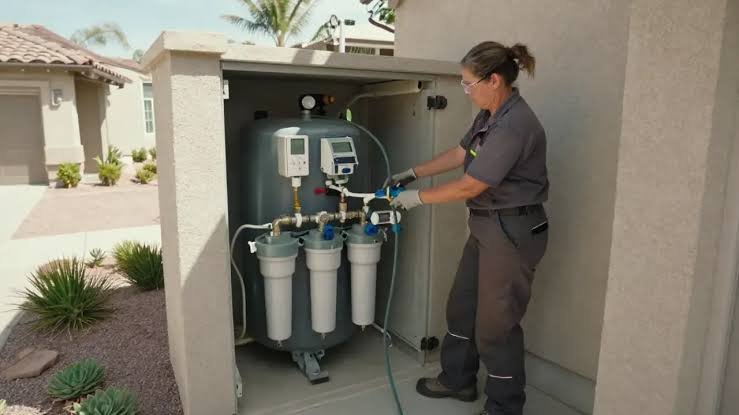
This is why commercial & industrial water treatment solutions should be designed around the facility’s actual operating conditions. A treatment method that works well for a small office may not be appropriate for a production line using large volumes of water every hour.
Start With a Proper Water Assessment
Before choosing equipment, businesses need to understand their incoming water supply and how it is used. Municipal water and private supplies can have different characteristics, while seasonal changes, source-water variations, and existing plumbing may introduce additional considerations.
Water testing helps establish a baseline. Depending on the application, testing may include hardness, pH, alkalinity, conductivity, dissolved solids, iron, manganese, and other relevant parameters. Facilities with specialized process requirements may need more detailed analysis, including microbiological testing where appropriate.
It is equally important to understand the system itself. How much water does the facility use during a typical shift? Are there periods of unusually high demand? Does the process require a particular mineral concentration or conductivity level? What happens if the treatment equipment goes offline?
These questions help determine the required capacity and system design. They also prevent a common mistake: buying equipment based on maximum advertised performance without checking whether it suits the site’s actual flow rate, water chemistry, or operating schedule.
A qualified treatment provider should explain the test results, identify the main concerns, and recommend options with clear performance expectations.
Managing Hardness in Commercial Water Systems
Hardness can be particularly troublesome in facilities that rely on heated water. Hotels, laundries, restaurants, apartment buildings, and industrial plants may all experience mineral deposits that increase cleaning time and affect equipment performance.
For suitable applications, commercial water softeners can reduce calcium and magnesium through an ion-exchange process. Water passes through a resin bed that captures hardness minerals and exchanges them for other ions, commonly sodium. The resin is regenerated periodically so the softener can continue operating.
Correct sizing is essential. A unit that is too small may regenerate too frequently or struggle during periods of heavy demand. An oversized system can also create unnecessary expense and may operate inefficiently if it isn’t configured appropriately.
Businesses should consider more than the initial purchase price. Salt consumption, water used during regeneration, service requirements, available floor space, and the cost of downtime all influence the overall value of a system.
Softening is not always the right answer, however. Some processes require specific mineral characteristics, and certain applications may benefit from other conditioning methods. A treatment specialist should consider the intended use before recommending a solution.
When Reverse Osmosis Makes Sense
Some commercial and industrial processes need water with significantly reduced dissolved solids. Examples may include selected food and beverage applications, laboratory work, equipment rinsing, and certain manufacturing operations. The required water quality varies, so the treatment design must reflect the process rather than a general assumption that purer water is always better.
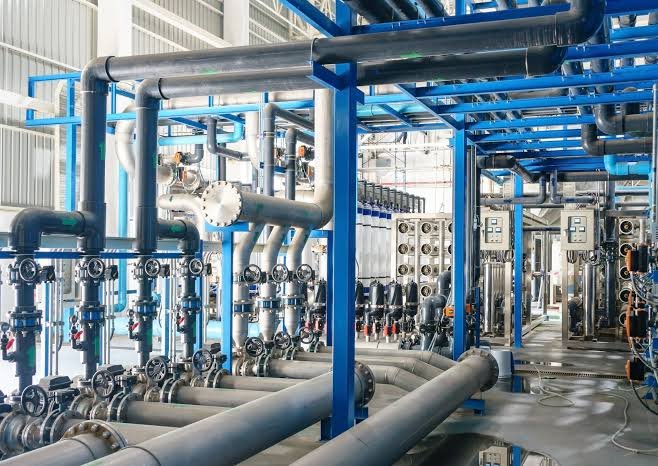
Reverse osmosis water filtration systems use pressure to move water through a semipermeable membrane, separating much of the dissolved material from the treated stream. The process can reduce a broad range of dissolved salts and other substances, depending on the membrane, operating conditions, and incoming water quality.
Reverse osmosis can be valuable when conventional filtration alone cannot achieve the required water specification. However, it isn’t a maintenance-free solution. Pretreatment may be necessary to manage hardness, chlorine, suspended solids, or other substances that could damage or foul the membrane.
The system also produces a reject stream containing concentrated dissolved material. Businesses should account for this water use, drainage requirements, energy consumption, and applicable discharge rules when evaluating the investment.
Membranes need monitoring and periodic cleaning or replacement. Pressure, flow, conductivity, and other operating indicators can help operators recognize declining performance before it causes a larger production issue.
Treatment Beyond Softening and Filtration
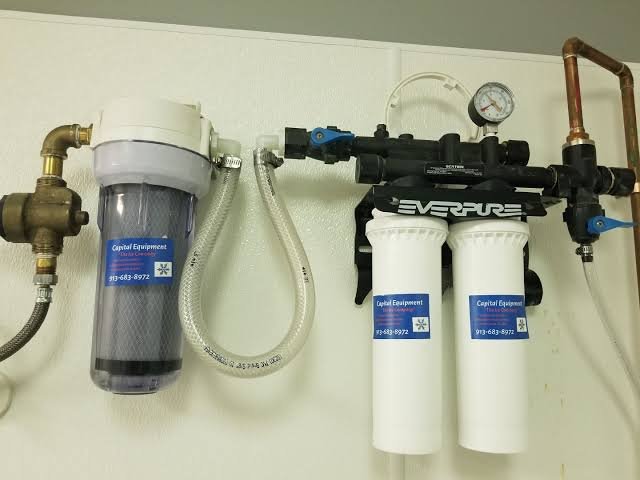
Not every water problem can be solved with a softener or reverse osmosis unit. Some facilities need sediment filtration to protect downstream equipment. Others may require activated carbon to reduce certain chemicals or improve taste and odor. Where microbiological risks are relevant, a validated disinfection approach may be necessary.
Cooling towers and boiler systems have their own requirements for controlling scale, corrosion, and biological growth. These systems often need a carefully managed combination of treatment chemicals, monitoring, filtration, and routine maintenance.
The right setup may involve several treatment stages, but adding more equipment doesn’t automatically improve results. Each component should have a defined purpose and be compatible with the others.
Businesses should also consider whether treatment by-products, concentrated waste streams, or chemical handling create additional operational responsibilities. These details are easier to manage when they’re addressed during system design rather than after installation.
Maintenance and Monitoring Protect the Investment
Even a well-designed system can lose performance if routine maintenance is neglected. Filters become loaded with particles, softener resin may require servicing, and membranes can foul or scale. Pumps, valves, sensors, and control systems also need periodic inspection.
A practical maintenance program should include scheduled inspections, operating records, water-quality checks, and clear responsibilities for staff. Automated monitoring can be useful in facilities where water quality must remain within a narrow range or where unexpected downtime would be costly.
It also helps to track water consumption and treatment expenses over time. Changes in chemical use, pressure, flow, or energy consumption may indicate that a system needs attention. Regular data review can reveal small problems before they turn into expensive repairs.
Staff training matters, too. Operators should understand normal readings, alarm procedures, safe chemical handling, and when to contact a qualified technician.
Building a More Reliable Water Strategy
Commercial water treatment works best when it is treated as part of everyday operations rather than an isolated equipment purchase. Start by identifying the facility’s water-quality requirements, test the supply, and compare technologies based on measurable performance and lifetime costs.
Consider how the system will fit into existing infrastructure, what maintenance it requires, and how the facility will operate during servicing or unexpected interruptions. Ask providers to explain their recommendations in practical terms and document the performance targets that matter to your business.
There isn’t one treatment system that suits every building or industrial process. A carefully selected combination of technologies may be appropriate for one facility, while a simpler setup may be sufficient for another.
Ultimately, good water management is about reliability as much as water quality. When treatment equipment matches the real demands of the operation and receives consistent attention, businesses can protect valuable assets, reduce avoidable disruptions, and make more informed decisions about their long-term operating costs.