Water plays a bigger role in running a business than most people realise. In a restaurant, it affects the taste of coffee, the clarity of ice, and the cleanliness of dishes. In a hotel, guests notice the quality of showers and the condition of bathroom fixtures. Even in an office, water influences everything from drinking fountains to the performance of equipment.
When water quality problems appear, they can quickly become more than a minor inconvenience. Scale builds up inside pipes, appliances need more frequent servicing, and stains or unpleasant tastes can leave customers with the wrong impression. The good news is that the right water treatment setup can prevent many of these headaches. The challenge is choosing equipment that suits the building, the water supply, and the demands of daily operations.
Understanding Your Business Water Needs
Every commercial property uses water differently. A small café may need reliable drinking water and protection for an espresso machine, while a hotel might require treatment for dozens of bathrooms, laundry facilities, kitchens, and heating systems. A manufacturing facility may have even more specific requirements.
Start by looking at the water entering the property. Is it supplied by a municipal network, a private well, or a borewell? Does it contain noticeable sediment? Are there signs of hardness, such as chalky deposits around taps? Has anyone complained about taste or odour?
These observations are useful, but they don’t replace testing. A professional water analysis can identify hardness, pH, dissolved solids, and specific contaminants relevant to the source. The results help determine which treatment technologies are appropriate and which aren’t necessary.
It’s also important to consider demand. A system designed for a small office may struggle during the breakfast rush at a busy restaurant. Water flow, peak usage, storage capacity, and available installation space all influence equipment selection.
In other words, don’t start with the product catalogue. Start with the problem you’re trying to solve.
Managing Hard Water in Commercial Properties
Hard water is a common concern for businesses, particularly where water contains elevated levels of calcium and magnesium. These minerals can form scale inside boilers, water heaters, dishwashers, and other equipment. Over time, deposits may reduce heating efficiency, restrict flow, and increase maintenance requirements.
For a business that relies on hot water throughout the day, the effects can add up. A restaurant may find that dishwashing equipment needs more attention, while a hotel might deal with recurring deposits on showerheads and taps. Small issues become expensive when they occur across an entire building.
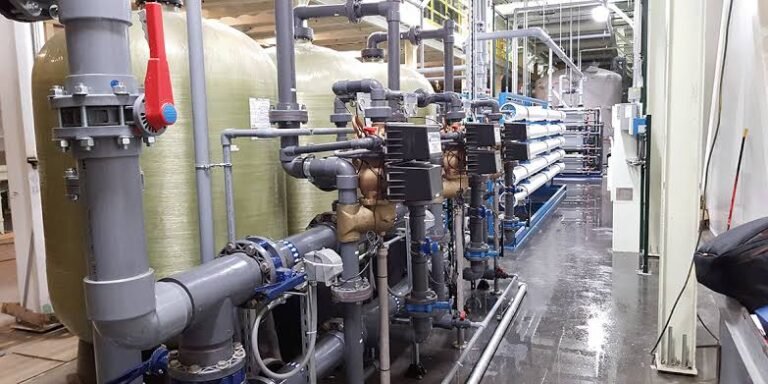
This is where commercial water softeners can make a difference. Traditional ion-exchange softeners reduce hardness by exchanging calcium and magnesium ions for other ions, commonly sodium. When correctly sized and maintained, they can help control scale formation and protect water-using equipment.
However, softening isn’t the answer to every water problem. It doesn’t automatically remove bacteria, sediment, or all dissolved contaminants. Some businesses may need a separate filtration or disinfection stage, depending on their water analysis.
Capacity matters, too. An undersized softener may struggle during busy periods, while an unnecessarily large unit can increase upfront costs and waste resources. A suitable system should reflect actual water consumption, hardness levels, regeneration requirements, and operating schedules.
Why Commercial Filtration Deserves Attention
Filtration serves a different purpose from softening. Depending on the technology, filters can reduce sediment, chlorine taste and odour, and certain other substances that affect water quality. Specialised systems may target specific contaminants, but performance varies considerably from one filter to another.
For restaurants, cafés, hotels, healthcare facilities, and offices, commercial water filters can support consistent water quality at selected taps or throughout particular processes. The right filter may improve the taste of drinking water, protect sensitive equipment from particles, or help a business meet its operational water-quality requirements.
The key is matching the filter to its intended use. A carbon filter that improves chlorine taste doesn’t necessarily remove dissolved salts or harmful microorganisms. A sediment cartridge can capture suspended particles, but it won’t solve every chemical concern. Claims should always be checked against independently verified performance information.
Businesses should also think about maintenance before installation. Filter cartridges have limited service lives, and their replacement schedule depends on the equipment, water quality, and volume treated. Waiting until water tastes unpleasant or pressure drops noticeably can mean the system has been operating beyond its useful service interval.
Keeping a simple maintenance log helps. Record installation dates, cartridge changes, inspection results, and any changes in water quality. It might seem like another administrative task, but it can prevent missed replacements and make troubleshooting much easier.
Paying Special Attention to Ice and Beverage Equipment
In hospitality, the smallest details often shape a customer’s experience. Ice is a good example. A cloudy cube, an unusual smell, or an unexpected taste can change how a cold drink is perceived, even when the beverage itself is prepared perfectly.
Ice machines also have internal components that depend on appropriate water conditions. Sediment can interfere with operation, while scale may accumulate on parts that handle water and freezing. The result can be more cleaning, inconsistent production, and avoidable service calls.
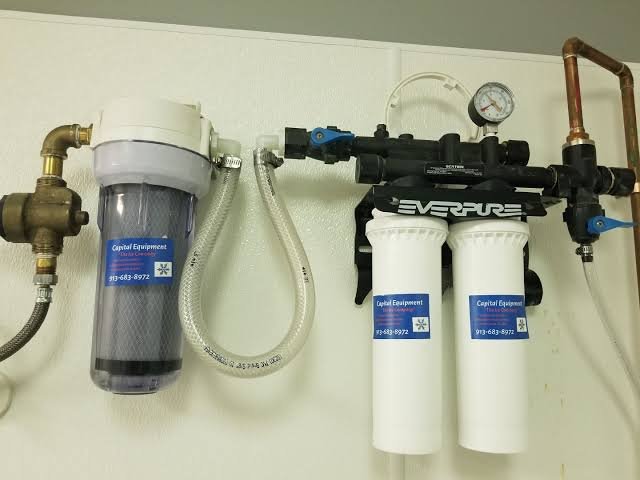
Proper ice machine filtration helps address selected water-quality issues before water enters the machine. Depending on local water conditions and manufacturer recommendations, the system may use sediment filtration, carbon filtration, or scale-control technology. Some installations combine more than one approach.
Choosing the right setup requires a little care. Not every ice machine needs the same filter, and some treatment methods may affect water flow or require specific replacement intervals. Check the machine manufacturer’s requirements and choose filtration designed for the actual water problem.
Regular cleaning and sanitising remain essential. Filtration does not eliminate the need to maintain the ice machine, clean storage bins, follow food-safety procedures, or protect ice from handling contamination. Clean source water is only one part of the process.
Installation, Maintenance, and Operating Costs
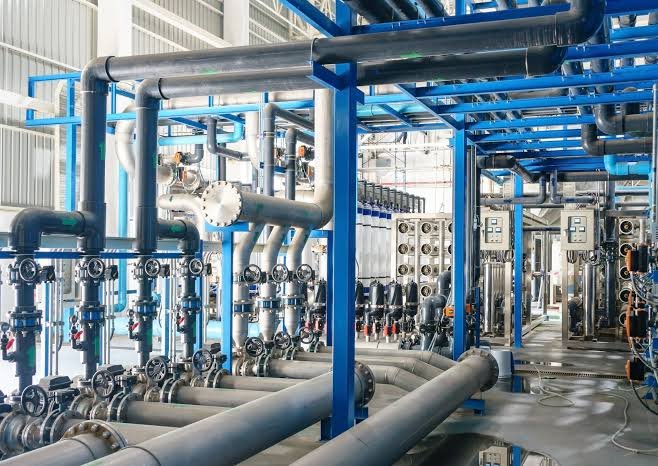
Water treatment equipment is a long-term operational investment, so the purchase price shouldn’t be the only consideration. Businesses need to account for installation, replacement filters, salt where applicable, electricity, water consumption, servicing, and possible downtime.
A system that looks inexpensive initially may cost more over several years if its cartridges are difficult to obtain or require frequent replacement. On the other hand, buying an oversized or unnecessarily complex system can tie up money without delivering meaningful benefits.
Professional installation is often worthwhile, especially where equipment connects to a building’s main supply or serves several machines. Correct sizing and plumbing help maintain adequate pressure and flow, while proper installation reduces the risk of leaks and performance problems.
Staff should also know the basics. Someone needs to recognise when a warning light appears, understand the replacement schedule, and know whom to contact if the water changes unexpectedly. A simple procedure can prevent a small maintenance issue from turning into an operational disruption.
Making Water Quality Part of Good Business
Reliable water treatment isn’t just about cleaner taps or better-tasting drinks. It can help protect equipment, support consistent service, and reduce the frustration of dealing with recurring scale, sediment, or unpleasant odours.
The smartest approach begins with testing and a clear understanding of how water is used throughout the property. From there, businesses can select suitable softeners, filters, or specialised equipment without paying for features they don’t need.
Review the system periodically, particularly if water demand changes, new equipment is installed, or the source supply becomes different. What worked for a small café may no longer be sufficient after a major expansion.
Ultimately, good water management is one of those behind-the-scenes decisions that makes everyday operations run more smoothly. Customers may never notice the filtration system in the service area or the softener in the utility room. They will, however, notice when the coffee tastes right, the ice is fresh, and the business delivers a consistently good experience. That’s the real value of choosing the right solution.